If you’ve been eyeing the mid-size SUV segment, you’ve probably got the Kia Seltos on your list. It has been a massive success for Kia India, known for its sharp looks and feature-loaded cabin. But there was always one lingering question: How safe is it really?
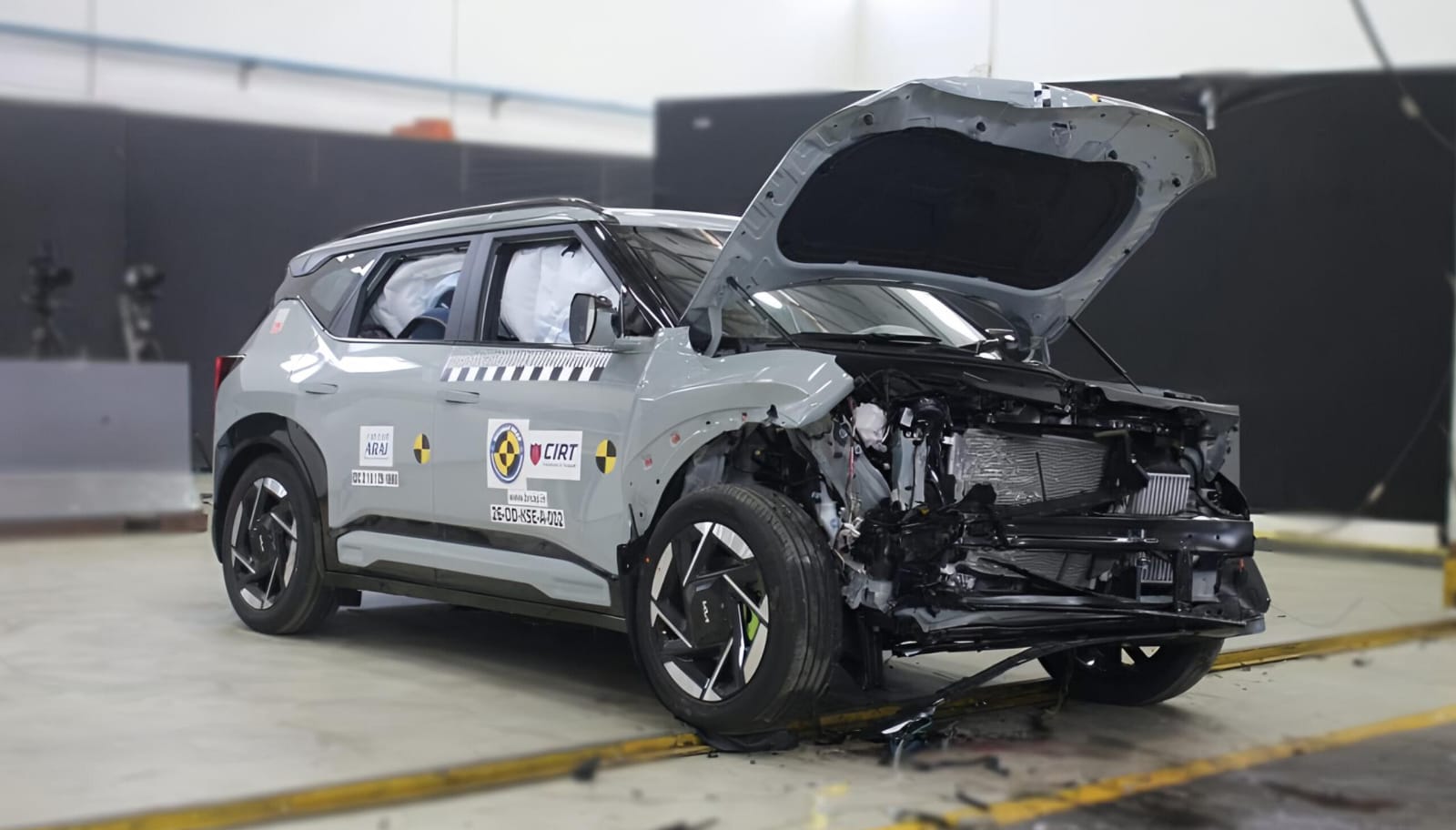
Well, that question has now been answered with authority. The New Kia Seltos has officially been put through the wringer by Bharat NCAP (India’s own car safety assessment program), and it has emerged with flying colors—scoring a full 5-star rating.
Let’s break down what this means, the detailed specifications of the test, and why this is a big deal for SUV enthusiasts.
The Big News: A Perfect Score
In the latest round of Bharat NCAP tests, the Kia Seltos (facelift model) proved that safety is no longer just a checklist item for the brand; it is a priority. The SUV secured:
- 5 Stars for Adult Occupant Protection (AOP)
- 5 Stars for Child Occupant Protection (COP)
This places the Seltos among the safest vehicles you can buy in India right now. Achieving a double 5-star rating is tough, especially for a vehicle that wasn’t originally designed only for the Indian market but adapted for it.
Bharat NCAP Crash Test Details: How Did It Perform?
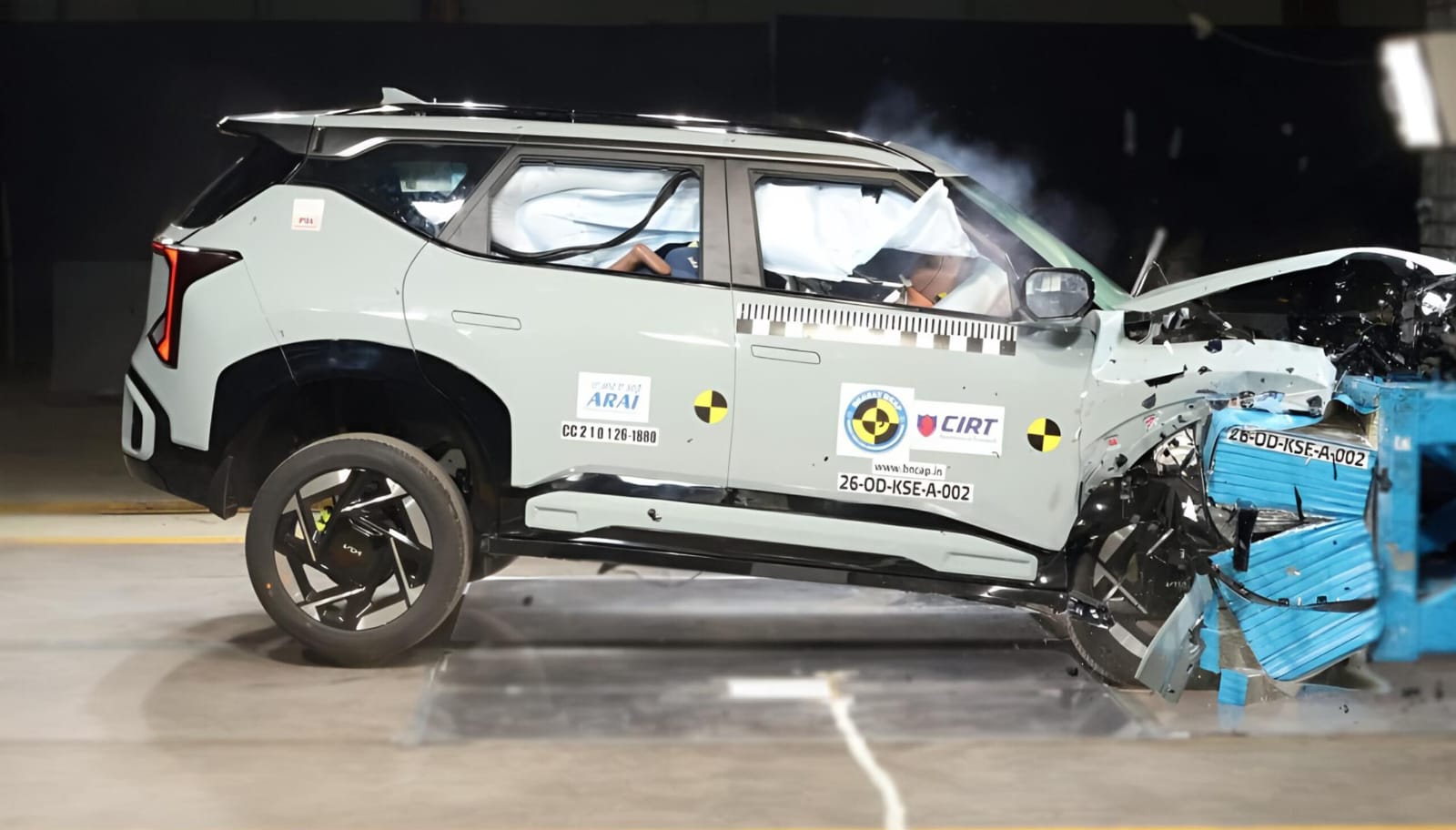
Bharat NCAP tests are rigorous, designed to simulate real-world accident scenarios. The Seltos underwent the standard Frontal Offset Crash Test (at 64 km/h) and the Side Impact Test. Here is a spec-by-spec breakdown of how it held up.
1. Frontal Offset Crash (64 km/h)
This test simulates a head-on collision between two vehicles of similar weight or a car hitting a rigid barrier.
- Structure & Stability: The bodyshell of the Seltos was rated as Stable. Crucially, it was capable of withstanding further load, meaning the passenger cell remained intact during the impact.
- Adult Occupant: The driver and passenger’s head, neck, chest, and knees received good to adequate protection. The footwell area showed stable integrity.
- Score: The car scored an impressive 14.61 out of 16.00 in the frontal offset test for adult occupants.
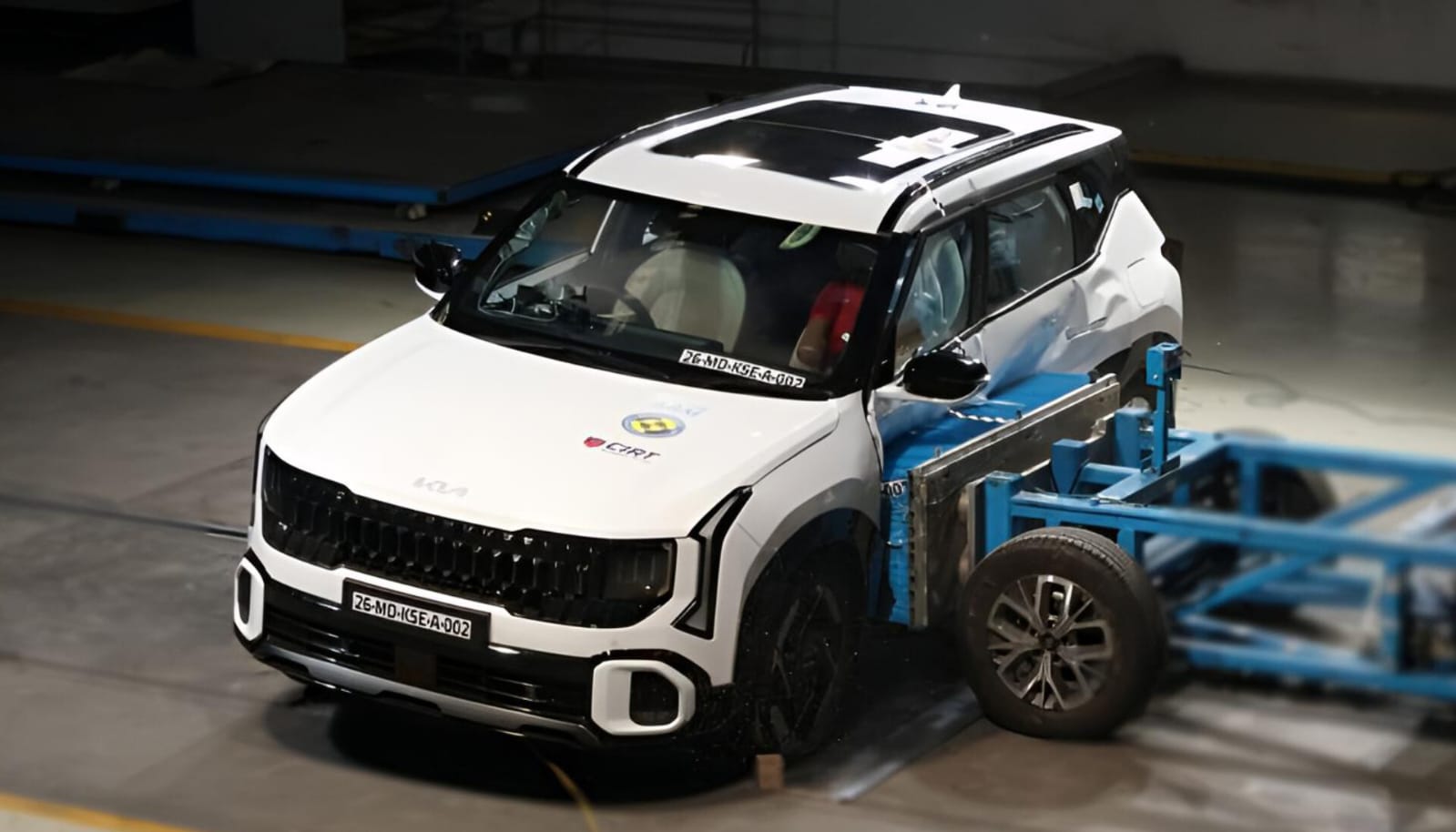
2. Side Impact Test
This test simulates being T-boned at an intersection.
- Performance: The Seltos scored a perfect 16.00 out of 16.00 in the side impact test.
- Body Structure: The side beams and the reinforcement in the doors absorbed the impact brilliantly, providing excellent protection to the chest and abdomen of the occupants.
3. Child Occupant Protection
For families, this is the most critical metric.
- The Seltos came with standard ISOFIX child seat anchors and a top tether.
- In the test, the child seats installed in the rear provided good protection to the 18-month-old and 3-year-old dummies, securing a solid score in this category.
Safety Specifications: What Makes It a 5-Star SUV?
Scoring 5 stars isn’t just about airbags; it’s about the entire structural and electronic package. The variant tested by Bharat NCAP was equipped with several features that contributed to this rating. Here is what Kia got right:
- Six Airbags (Standard): Kia recently made 6 airbags standard across the Seltos range. This includes dual front, side, and curtain airbags, which were crucial for the side impact score.
- ESC (Electronic Stability Control): Standard across all variants. This prevents skidding and loss of control—a mandatory requirement for high NCAP ratings.
- All-Wheel Disc Brakes: The higher variants (and the tested model) come with disc brakes on all four wheels, ensuring shorter stopping distances.
- Strong Body Structure: Kia claims the use of Advanced High-Strength Steel (AHSS) in the chassis construction, which prevents the cabin from crumpling during a severe crash.
- Tyre Pressure Monitoring System (TPMS): Ensures optimal tyre health, reducing the risk of blowouts.
How Does It Compare to Rivals?
To put this achievement in perspective, let’s look at how the Seltos stacks up against its primary competitors in the Bharat NCAP (or Global NCAP) context:
| SUV Model | Bharat NCAP / Global NCAP Rating (Adult) |
|---|---|
| Kia Seltos (New) | 5 Stars |
| Hyundai Creta (New) | 5 Stars (Expected/Similar platform) |
| Maruti Suzuki Grand Vitara | 4 Stars (Global NCAP) |
| Volkswagen Taigun | 5 Stars (Global NCAP) |
| Honda Elevate | 4 Stars (Global NCAP) |
Note: The Seltos shares its platform with the Hyundai Creta, which is also expected to score similarly in Bharat NCAP tests.
What This Means for Buyers
If you are in the market for a compact SUV, the Seltos just became one of the most compelling choices. Earlier, the "Sunroof vs. Safety" debate was real in this segment. You often had to choose between a feature-loaded car or a safe one.
- With this 5-star rating, the New Kia Seltos bridges that gap. You no longer have to compromise on safety to get the fancy panoramic sunroof, the premium sound system, or the striking LED lighting.
- Kia India has also been smart about their variant strategy. The 6-airbag system being standard means that even the base variant (HTE) inherits the same structural safety as the top-end variant tested by Bharat NCAP.
Poora Review Hinglish Mein
“Bhai, yeh Seltos ab full package hai! Pehle log kehte the ‘feature hai par safety kya?’ Ab Bharat NCAP ne 5-star de diya. Matlab ab aap family ke saath ghumo, aaram se ghumo. Gaadi mein 6 airbags standard, ESC, aur mazboot body—yeh sab milke aapko aur aapki family ko suraksha ka ek strong shield de dete hain. Agar aap 20-25 lakh ke segment mein SUV dekh rahe the, toh ab Seltos ka naam list mein sabse upar rakhna padega. Safety aur swag, dono ek saath mil gaya!”
Conclusion
- The New Kia Seltos achieving a 5-star Bharat NCAP rating is a significant milestone. It silences critics who doubted the safety of Korean SUVs in India and sets a new benchmark in the mid-size SUV category.
- With a robust build quality, a full suite of standard safety features (6 airbags, ESC), and excellent performance in both frontal and side crash tests, the Seltos proves that you don’t have to sacrifice safety for style.
- If you value your family’s safety but don’t want to compromise on driving pleasure and technology, the Kia Seltos is now, officially, one of the safest bets on Indian roads.
Leave a Reply